Module 2: Sustainability

➔Basic concepts of Conventional and non-conventional energy
➔solar energy
➔Fuel cells
➔Wind energy
➔Small hydro plant
➔bio-fuel
➔Energy derived from oceans and Geothermal energy.
ENERGY SOURCES
CONVENTIONAL &
NON CONVENTIONAL SOURCES
- SOLAR ENERGY
- WIND POWER
- HYDROPOWER
- BIOFUEL
- GEOTHERMAL
- ENERGY DERIVED FROM OCEANS
ENERGY SOURCES
Renewable & Non-Renewable Resources
Conventional & Non-Conventional Sources
➕ Renewable Resources
- Solar energy
- Wind
- Geothermal
- Wood
- Hydropower
- Biomass
➕Non-Renewable Resources
- Coal
- Petroleum (Crude oil)
- Natural gas
- Nuclear (Uranium)
Conventional Resources
- Coal
- Petroleum (Crude oil)
- Natural gas
- Firewood / Fuelwood
Non-Conventional Resources
- Solar
- wind,
- Hydropower, tidal power
- Biomass, biofuel
- geothermal
SOLAR ENERGY TECHNOLOGIES
- Thermal conversion
- Solar water heater
- Solar space heating of
- buildings
- Solar air conditioning
- Solar refrigeration
- Solar drying
- Solar cooking
- Solar electricity – thermal
- photo-conversion
- Solar greenhouses
- Solar furnaces
- Solar desalination
- Salt production
- Solar electricity -
- photovoltaic
SOLAR WATER HEATING
Glass panels on roof collect & absorb heat - heat water

SOLAR SPACE HEATING OF BUILDINGS
Provided architectural design of the building with large south-facing windows

SOLAR AIR CONDITIONING
- Solar-powered AC system for buildings
- uses a solar panel (not electricity) to superheat the pressurized refrigerant

SOLAR REFRIGERATION

SOLAR DRYING

- The traditional method of utilizing direct solar energy
- Agricultural products – crops, fruits, vegetables, fish, hay, etc all are sun dried
- Simplest and cheapest way to dry
SOLAR COOKING
- It is well insulated shallow rectangular/square metal box with a flat glass cover - blackened inside (to increase the temperature)
- heat absorbed by the more blackened surface is used for cooking
SOLAR GREENHOUSE
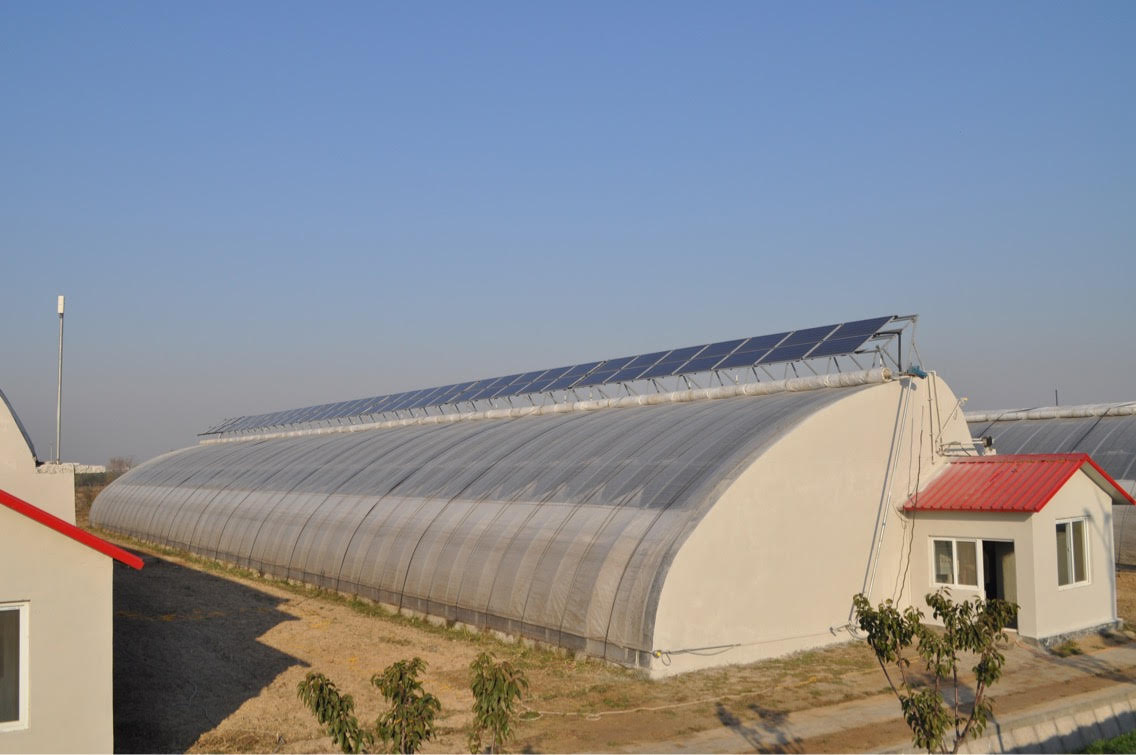
- The greenhouse is a closed structure covered with a transparent material( glass/plastic)
- Utilize solar energy for the growth of plants
SOLAR FURNACES
- Use huge array of mirrors to concentrate the sun’s energy into a small area & produce very high temperature
- Can produce around 35000C
- Can be used to melt refractory
SALT PRODUCTION
Traditional method to obtain salt

SOLAR DESALINATION
- Solar radiation passed through glass cover and is absorbed and converted into heat , which evaporates the water in the saline water
- The produced vapor is condensed to form purified water & collected from the under side of flat sloping roof
SOLAR ELECTRICITY - THERMAL

Solar energy is used to heat a fluid & runs the turbine- generates electricity
SOLAR ELECTRICITY - PHOTOVOLTAIC
Made of semiconducting materials – that converts sunlight directly into electricity
Case:Cochin International airport Ltd
- World’s first airport - that completely operates on solar power. --- 18 August 2015th
- Comprise - 46,150 solar panels laid across 45 acres near cargo complex.
- 12 MWp solar power plant – producing 50,000 to 60,000 units of electricity per day
- This is a grid connected system without battery storage and a power banking module with the Kerala State electricity board (KSEB) has been worked out-
- wherein, CIAL gives as much power it produces (in day time) to (the grid of) KSEB and ' buy ' back the power from them when needed (especially in night).
- Reduce carbon emissions equal to 1.75 lakh MT for the next 25 years. This is equal to planting 30 lakh trees.

FUEL CELLS
A device that generates electricity by a chemical reaction every fuel cell has
- 2 electrodes One positive -anode & other one negative-cathode an electrolyte
- An electrolyte Which carries electrically charged particles from one electrode to another
- A catalyst Which speeds the reaction at the electrodes

- hydrogen is the basic fuel, but fuel cells also require oxygen
- fuel cells generate electricity with very little pollution
- Only byproduct - water
WIND ENERGY
.jpg)
- Windmills –are erected at high altitudes & its blades are attached to the turbines
- As the blades rotate, the kinetic energy of the wind can be used to run the turbines, which run the generator and generates electricity.
- Turbines generally require a wind speed of 20km/hr Coastal areas, at top of rounded hills, open plains, gaps in mountains
- places where the wind is strong and reliable
HYDRO-ELECTRIC POWER
Dam
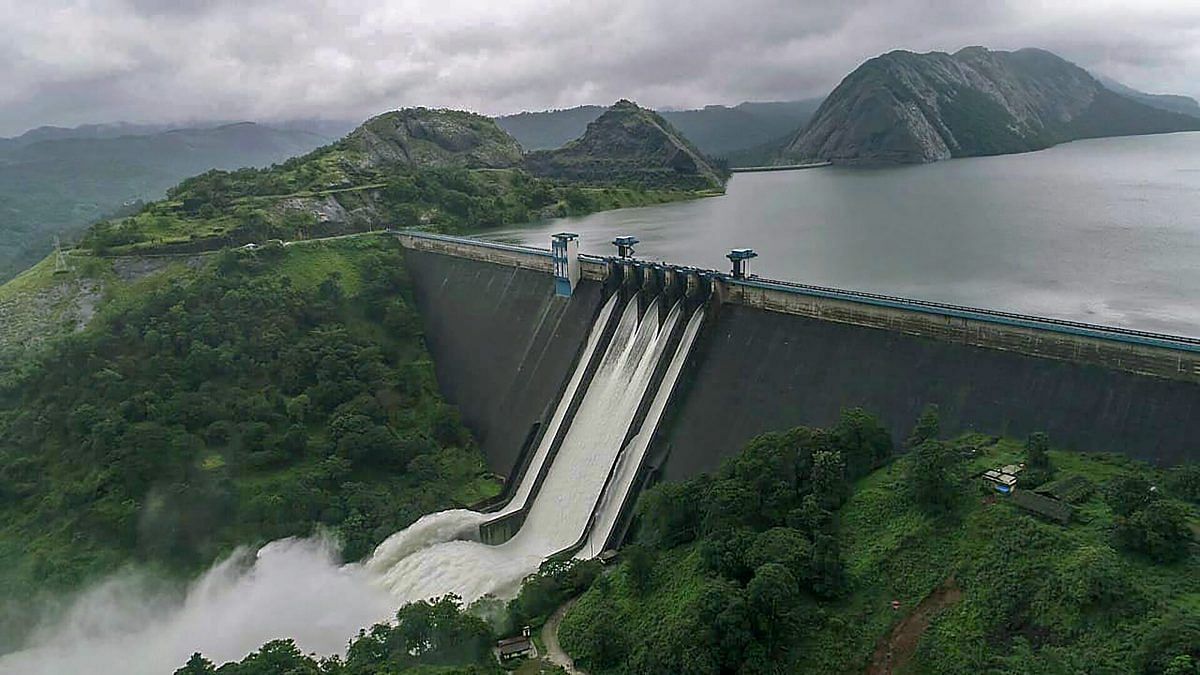
- Gravitational potential energy is stored in the water above the dam
- As water flows from higher elevation to lower elevation through penstock and it attains kinetic energy
- It arrives at the turbines at high pressure and turns it and thus drives the generators and generates electricity
- Classified based on station capacity
- Micro hydropower: < 100 kW
- Mini hydropower: 101 – 2000 kW
- Small hydropower: 2001 – 25000 kW
ENERGY DERIVED FROM OCEANS
ENERGY DERIVED FROM TIDES

ADVANTAGES OF TIDAL POWER
- Once we’ve built it, tidal power is free
- Not produce greenhouse gases or other waste
- It produces electricity reliably
CATEGORIES OF TIDAL POWER
- Tidal stream systems
- Barrages
- Tidal lagoons
ENERGY DERIVED FROM WAVES
- Ocean waves are caused by the wind as it blows across the sea.
- But it's not easy to trap this energy and convert it into electricity in large amounts. Thus, wave power stations are rare
- At a wave power station – the incoming waves cause the water in the chamber to rise and fall, which
DISADVANTAGES OF WAVE POWER
- Depends on waves - sometimes wave energy will be more and sometimes almost nil
- Needs a suitable site where waves are consistently strong
- Some designs are noisy
BIOFUELS
- Biofuels are fuels derived from biomass.
- Biomass is any organic material that has stored sunlight in the form of chemical energy Plants use chlorophyll to convert the solar energy to stored energy in the plants by a process called photosynthesis.
- As a fuel, biomass may include wood, wood waste, straw, manure, sugarcane, and many other by-products from a variety of agricultural processes. They can be burnt to produce energy.

Biofuels that can be derived from biomass: Examples
- Bio alcohols
- Biodiesel
- Bioethers
- Biogas
- Green diesel(Green diesel is produced through a refining process, rather
then through a chemical reaction.)
Geothermal energy
- It is the energy obtained by tapping the heat of the earth itself, usually from kilometers deep into the earth’s crust.
- ‰Geothermal energy can be tapped in two ways.
1. Geothermal power plants
- Geothermal power plants use heat from deep inside the earth to generate steam to make electricity.
- Wells are driven deep into the earth.
- There will be a set of pumping well and injection well.
Geothermal power plants: Working
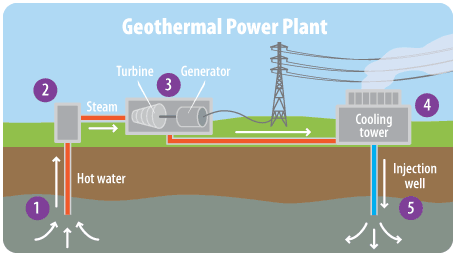
- Hot water is pumped from deep underground through a well under high pressure.
- When the water reaches the surface, the pressure is dropped, which causes the water to turn into steam.
- The steam spins a turbine, which is connected to a generator that produces electricity
- The steam cools off in a cooling tower and condenses back to the water.
- The cooled water is pumped back into the Earth to begin the process again
Geothermal Heat Pumps

- Geothermal power pumps tap heat from shallow reservoirs close to the earth’s surface.
- These systems transfer heat by pumping water or a refrigerant through pipes just below the earth's surface.
- During the winter season, the pumped water or refrigerant from the building absorbs warmth from beneath the earth and brings heat to the building.
- In summer, some heat pumps can run in reverse and bring coolness to the building.
Geothermal Heat Pumps : Working
Water or a refrigerant moves through a loop of pipes. ‰ When the weather is cold, the water or refrigerant heats up as it travels through part o of the loop buried underground.Once it gets back above ground, the warmed water or refrigerant transfers heat into the building. ‰ The water or refrigerant cools down after its heat is transferred. It is pumped back underground where it heats up once more, starting the process again. ‰On a hot day, the system can run in reverse. The water or refrigerant cools the building and then is pumped underground where extra heat is transferred to the ground around the pipes.
Geothermal Heat Pumps: Advantages
- Inexhaustible and renewable energy source.
- Non-polluting and eco-friendly source
- An excellent supplement to other renewable sources.
- Not affected by seasonal changes.
Disadvantages
- Not available on many occasions.
- The overall efficiency of power production is low.
---------------------------------------------------KERALA NOTES-------------------------------------------------