Table of Content
➔ Sustainability- Introduction
➔ Sustainability- Definition
➔ Sustainability- Need and Concept
➔ Social Sustainability Concept
➔ Environmental Sustainability Concept
➔ Economic Sustainability Concept
➔ Sustainable Development
➔ Nexus Between Technology And Sustainable Development
➔ Millennium Development Goals (MDGs)
➔ Sustainable Development Goals (SDGs)
➔ Clean Development Mechanism (CDM)
SUSTAINABILITY- INTRODUCTION
- The earth belongs to humans only
- Ignore the fact that humans are part of the Earth's biosphere
- Earth's stock of resources are infinite
- The environment can bear any amount of damage that is caused by human activity.
SUSTAINABILITY- DEFINITION
SUSTAINABILITY- NEED & CONCEPT
1. Exhaustion of Resources – Water, Petroleum, Forests
2. Loss of Biodiversity - Extinction of Animal/Plant Species due to Water, Soil, Air Pollution
3. Deforestation - conversion of forestland to farms, urban use, etc.
4. Ozone Depletion - reduction of the amount of ozone in the stratosphere due to the emission of
chlorofluorocarbons (CFCs). CFC/s emitted from the industries, rises to the
Stratosphere. Sunlight breaks CFCs to release Chlorine. Chlorine reacts with
Ozone and destroys it.
5. Acid Deposition – results in acid rain, acid fog, and acid mist.
6. Desertification - a type of land degradation in which a land region becomes dry, typically
losing its water bodies, vegetation, and wildlife.
7. Eutrophication - a form of water pollution that occurs when excessive fertilizers run into lakes
and rivers. This encourages the overgrowth of algae and other aquatic plants.
8. Global Warming - a gradual increase in the average temperature of the Earth's atmosphere and
its oceans, caused by increasing concentrations of greenhouse gases – Carbon oxides,
Nitrous oxides, sulfur oxides, Fluorocarbons

SOCIAL- ENVIRONMENTAL AND ECONOMIC SUSTAINABILITY CONCEPTS

SOCIAL SUSTAINABILITY
ENVIRONMENTAL SUSTAINABILITY
ECONOMIC SUSTAINABILITY
ECONOMIC-SOCIAL AND ENVIRONMENTAL MATRIX

SUSTAINABLE DEVELOPMENT

MEASURES OF SUSTAINABLE DEVELOPMENT
NEXUS BETWEEN TECHNOLOGY AND SUSTAINABLE DEVELOPMENT
- Conserving natural capital (renewable and nonrenewable resources)
- Reducing waste and pollution
- Raising efficiency standards
- Finding substitutes for toxic/hazardous materials
- Solar
- Biomass (It is a renewable energy resource derived from the carbonaceous waste of various human and natural activities. It is derived from numerous sources, including the by-products from the timber industry, agricultural crops, raw material from the forest, major parts of household waste, and wood.)
- Wind
- Tide
- geothermal Heat
MILLENNIUM DEVELOPMENT GOALS (MDGs)
The Eight Millennium Development Goals are :
- To eradicate extreme poverty and hunger;
- To achieve universal primary education;
- To promote gender equality and empower women;
- To reduce child mortality;
- To improve maternal health;
- To combat HIV/AIDS, malaria, and other diseases;
- To ensure environmental sustainability; and
- To develop a global partnership for the development
SUSTAINABLE DEVELOPMENT GOALS (SDGs)
The 17 sustainable development goals (SDGs) to transform our world:
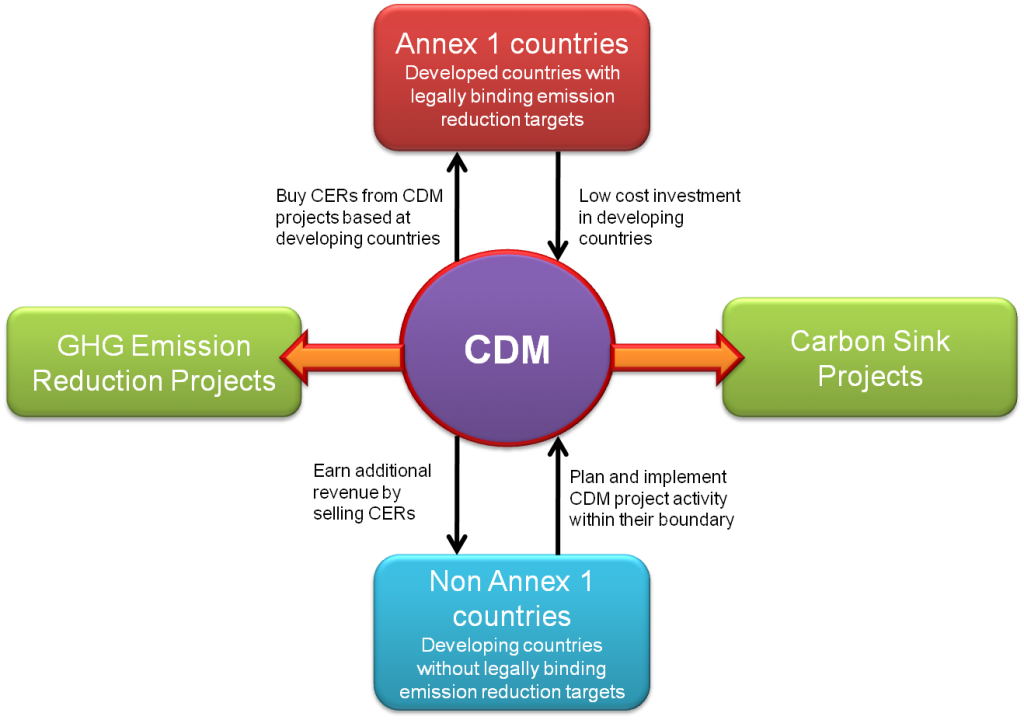
CLEAN DEVELOPMENT MECHANISM (CDM)